
Cultural & Historical Background of Jerk Chicken
Jerk cooking is one of Jamaica’s most important culinary traditions, rooted in Indigenous Taíno techniques and later shaped by African and Maroon communities.
The word “jerk” likely comes from the Spanish charqui, meaning dried or preserved meat. Long before modern ovens and grills, the Taíno people preserved meat by seasoning it heavily and slow-cooking it over wood, often pimento (allspice) branches. When enslaved Africans escaped into Jamaica’s mountainous interior, forming Maroon communities, they adapted these techniques to survive while remaining hidden—smoking, burying, and slow-cooking meat to reduce visible smoke and preserve food.
Over time, jerk became a symbol of resistance, resilience, and identity, evolving into a bold, celebratory food cooked openly over fire. The defining flavors—allspice, thyme, Scotch bonnet, garlic, and smoke—are not arbitrary; they reflect what was locally available and culturally significant.
Today, jerk chicken is both everyday street food and ceremonial cooking, often prepared outdoors, shared communally, and eaten with rice & peas. While modern versions vary, authentic jerk is always about balance: heat, aroma, earthiness, and depth rather than raw spiciness alone.
Why This Recipe Works
This version respects traditional jerk principles while adapting them thoughtfully for home cooking.
- Balanced Heat
Using 2–3 Scotch bonnets gives authentic warmth and aroma without overwhelming bitterness or pain. Leaving seeds optional mirrors real Jamaican practice—heat is adjusted by the cook, not dictated by the recipe. - Sour Orange Simulation
The lime + restrained orange juice combo recreates the sharp, slightly bitter acidity of sour orange, a cornerstone of classic jerk, without tipping into sweetness. - Fresh + Dry Garlic
Fresh garlic brings pungency; garlic powder adds savory depth that survives high heat. Together they create a more rounded flavor than either alone. - Allspice & Thyme in the Lead
These remain the dominant notes, as they should. The spices support the chicken instead of turning it into a generic “spicy roast.” - Bone-In Chicken Choice
Thighs and drumsticks stay juicy, absorb marinade deeply, and tolerate bold spice—exactly why they’re favored in Jamaica.
Tips & Notes
Prep & Marinating
- Marinate overnight if possible (12–24 hours). Jerk isn’t a quick flavor.
- Get marinade under the skin for real penetration.
- Don’t overload with marinade during cooking—excess will burn instead of char.
Heat Control
- For aromatic heat: remove seeds.
- For full punch: leave some seeds in.
- Never substitute mild chilies—Scotch bonnet flavor is as important as heat.
Cooking Notes
- Use a rack over a tray to avoid steaming.
- Rotate the tray halfway through cooking for even browning.
- Torch in short bursts—think blistered, not burnt.
Serving & Holding
- Rest chicken 5–10 minutes before serving.
- Jerk chicken tastes even better after sitting briefly—flavors settle and deepen.
With Rice & Peas
- The richness of coconut rice balances the heat.
- A squeeze of lime over the plate just before serving is very Jamaican and very correct.


Authentic Jamaican Jerk Chicken Recipe
Fresh Ingredients
Pantry Ingredients
Instructions
-
Add everything except the chicken to a blender or food processor.
-
Blend into a thick, coarse paste (not totally smooth).
-
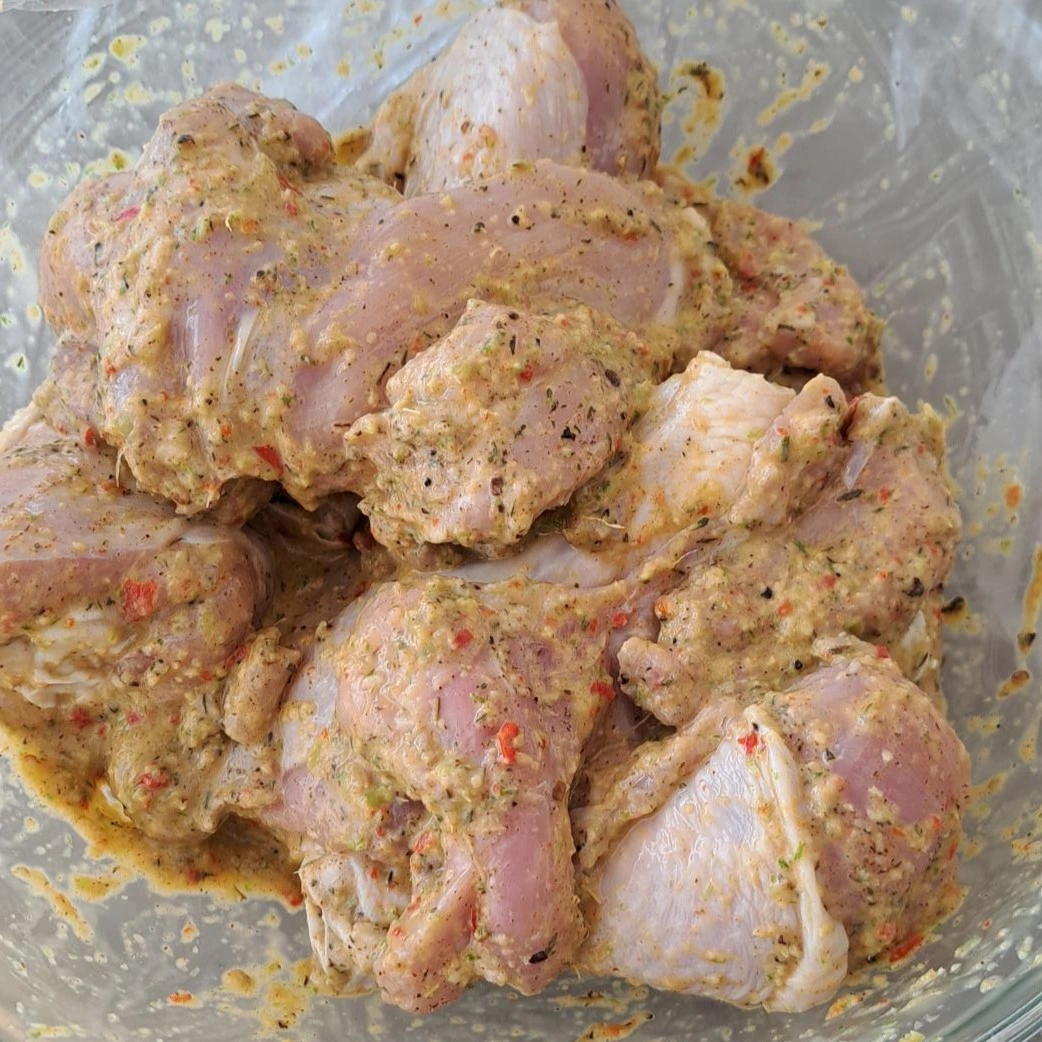
Clean (trim) chicken and pat dry, then coat generously, getting under the skin where possible. I mix in a large bowl.
-
Marinate for at least 3 hours, ideally overnight (12–24 hours).
-
Cook: Grill or BBQ (best) over a medium-high heat for about 2--25 minutes, OR cook in oven (easiest) at 200°C / 400°F for ~45–60 min.
-
Note: If using a meat thermometer, it should reach 73°C / 165°F. If not using a thermometer, poke with a knife or needle - the liquid should be clear and the metal hot to to the touch. Check temp/done-ness in various places/parts.
